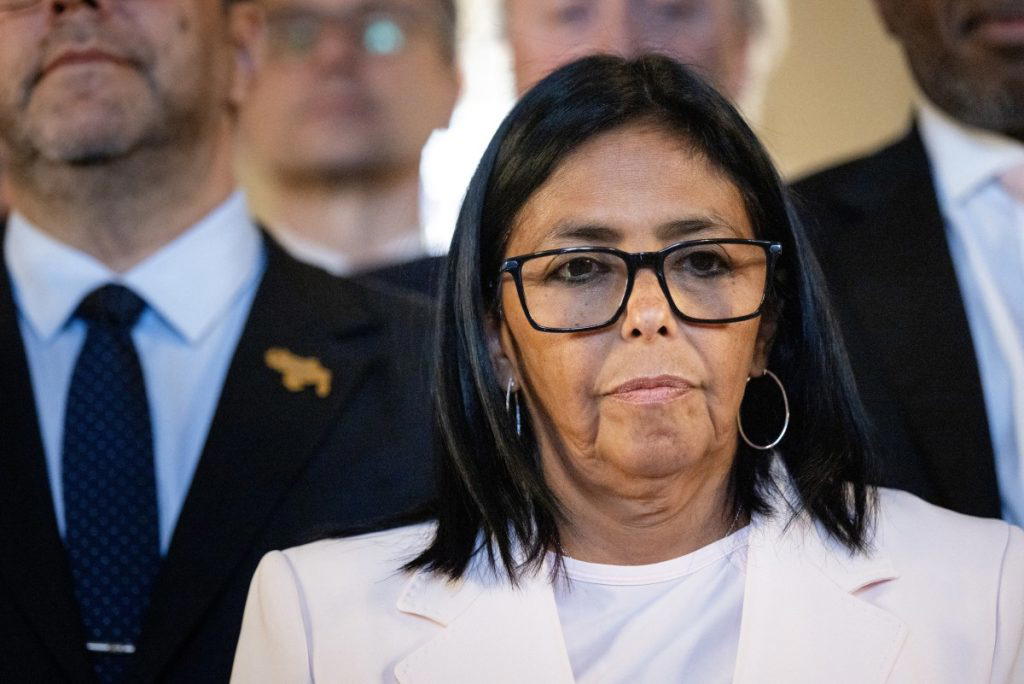
The political landscape in Venezuela has taken a dramatic turn, following the recent capture of deposed leader Nicolas Maduro. Amidst speculation, U.S. President Donald Trump suggested that Venezuela might consider becoming the 51st state of the United States. However, the acting president of Venezuela, Juan Guaidó, firmly rejected this notion, stating, "We have never considered that option; our sovereignty is non-negotiable."
This statement underscores the complex dynamics of Venezuelan politics, where national sovereignty remains a sensitive topic. Guaidó's administration seeks to establish legitimacy and rally international support against what they regard as a dictatorship, and discussions of statehood could undermine their efforts. Trump's comments reflect a broader U.S. strategy of interventionism in Latin America, aiming to reshape the region's political frameworks.
Looking ahead, the rejection of statehood signals a desire for independence rather than subjugation, even in the face of economic hardship and political instability. As Venezuela navigates its post-Maduro future, the balance between foreign influence and national sovereignty will be crucial in shaping its trajectory.