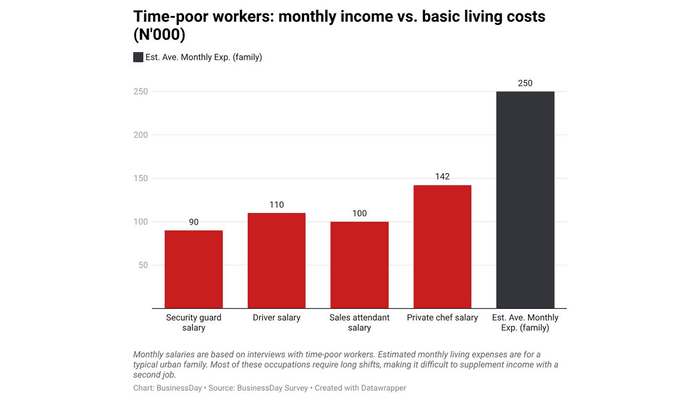
In Nigeria, the traditional belief that a full-time job guarantees financial stability is being challenged as economic realities shift. Rising inflation and the high cost of living mean that one income is often insufficient for families to make ends meet. Many Nigerians are now grappling with the necessity of side hustles or multiple jobs, yet the time and energy required to manage these additional roles create a paradox.
Recent statistics indicate that nearly 40% of Nigerians engage in informal work to supplement their income, underscoring the urgent need for economic reform. As Abiola Afolabi, an economist at the Lagos Business School, notes, “People are working harder than ever, yet they still find themselves unable to secure the basics.” This trend not only exacerbates stress and burnout but also stifles productivity and innovation in the formal sector.
Looking ahead, policymakers must prioritize sustainable job creation and support systems that allow for work-life balance. Without addressing these issues, the cycle of poverty will persist, leaving many Nigerians trapped in a relentless struggle for survival.