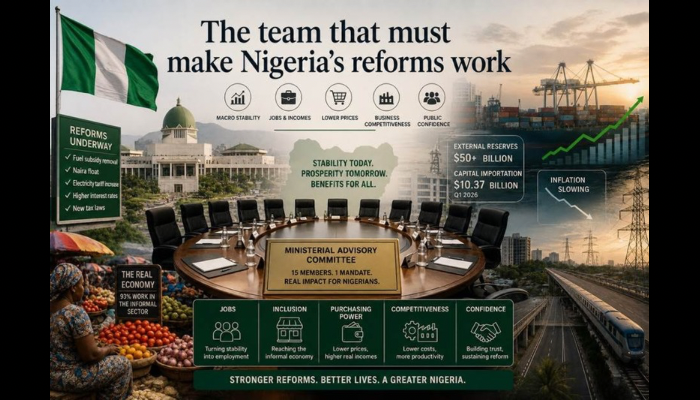
In a bid to revitalize its economy, Nigeria's government has launched an unprecedented reform programme, marking a pivotal moment for the nation's future. This ambitious initiative, spanning three years, aims to address systemic challenges, improve infrastructure, and boost foreign investment. At the heart of this endeavour is the newly formed Ministerial Advisory Committee, tasked with overseeing the implementation of these reforms.
Key developments include the committee's recent consultations with stakeholders across various sectors, emphasizing the importance of collaboration. "We must ensure that these reforms are not just plans on paper but translate into tangible benefits for Nigerians," stated Amina Mohammed, Minister of Finance. Her remarks underscore the urgency for actionable outcomes that directly impact citizens' lives.
As the committee begins its work, the stakes are high. Successful execution could lay the groundwork for sustainable economic growth and stability in Nigeria. However, the path ahead is fraught with challenges, including political resistance and economic volatility. If the Ministerial Advisory Committee can navigate these hurdles effectively, it may redefine Nigeria’s economic landscape for generations to come.