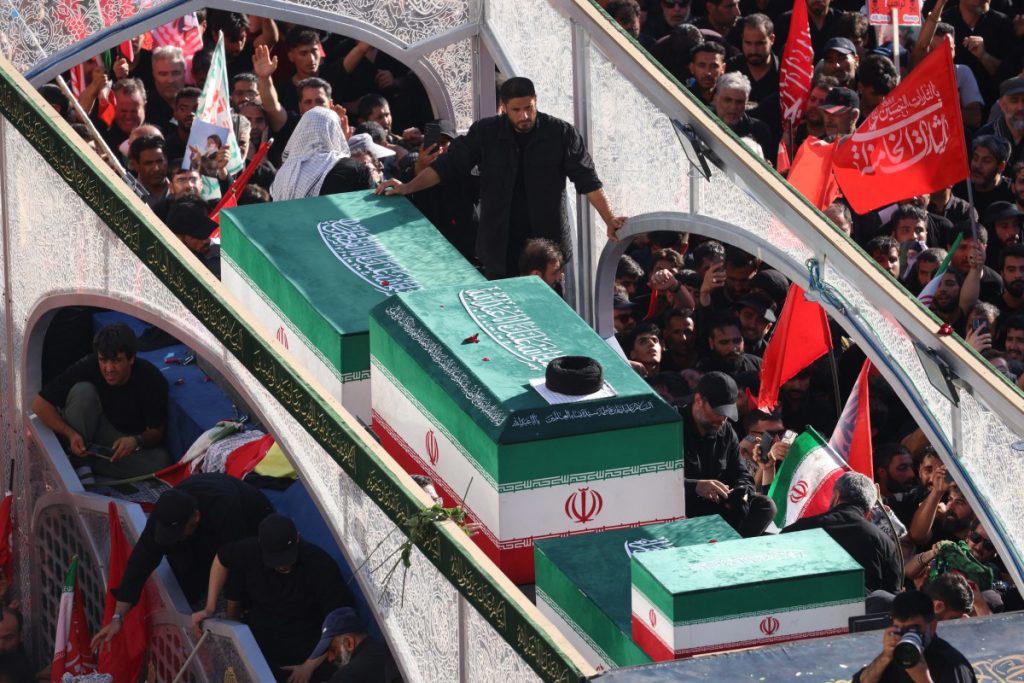
The burial of former Supreme Leader Ali Khamenei in his hometown marks a poignant moment in Iran's turbulent political landscape, following his death during the explosive onset of the US-Israeli war against Iran on February 28. Khamenei's demise, alongside several family members, has left a leadership void at a time when the nation faces unprecedented external pressures and internal divisions.
In the wake of Khamenei’s death, Iran is grappling with the dual crises of military conflict and political uncertainty. His tenure, characterized by staunch anti-Western rhetoric and regional assertiveness, has now been thrust into question as the Iranian populace looks for stability. “We must remain united in the face of adversity,” urged Mohammad Javad Zarif, former Foreign Minister, highlighting the need for cohesion during this fraught period.
As Iran navigates its future without Khamenei, the potential for new leadership dynamics could reshape its domestic and foreign policies. The coming weeks will be crucial to observe how the Iranian government consolidates power and responds to both international pressures and calls for reform from within.