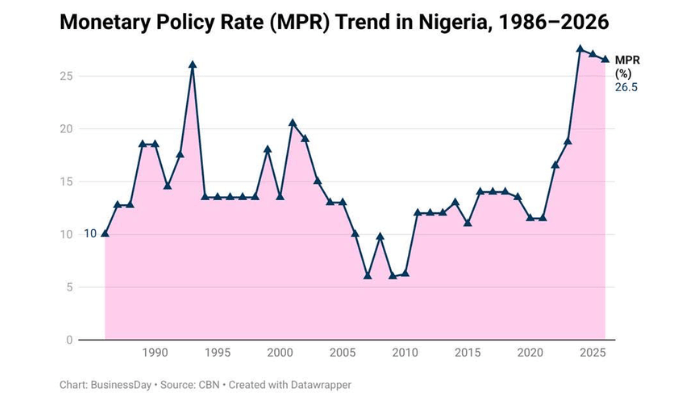
Inflation in Nigeria continues to defy monetary reforms, raising concerns as the Central Bank's recent decision to maintain the benchmark interest rate at 26.5 percent reflects ongoing economic challenges. Despite various strategies to combat rising prices, inflation remains stubbornly high, significantly impacting consumer purchasing power and economic stability.
Economic analysts highlight systemic issues, including supply chain disruptions and the devaluation of the naira, as contributing factors. "Our current monetary policies are not enough to tackle the underlying issues driving inflation," said Dr. Ngozi Okonjo-Iweala, an economist and former finance minister. The lack of effective fiscal policies and structural reforms further complicates the situation, leaving the Central Bank with limited options.
Looking ahead, experts suggest that without a comprehensive approach combining monetary tightening with targeted fiscal interventions, Nigeria may struggle to rein in inflation. As the government grapples with these challenges, the urgency for innovative solutions to stabilize the economy becomes increasingly critical. The path forward will require not only monetary discipline but also a commitment to addressing the root causes of inflation.