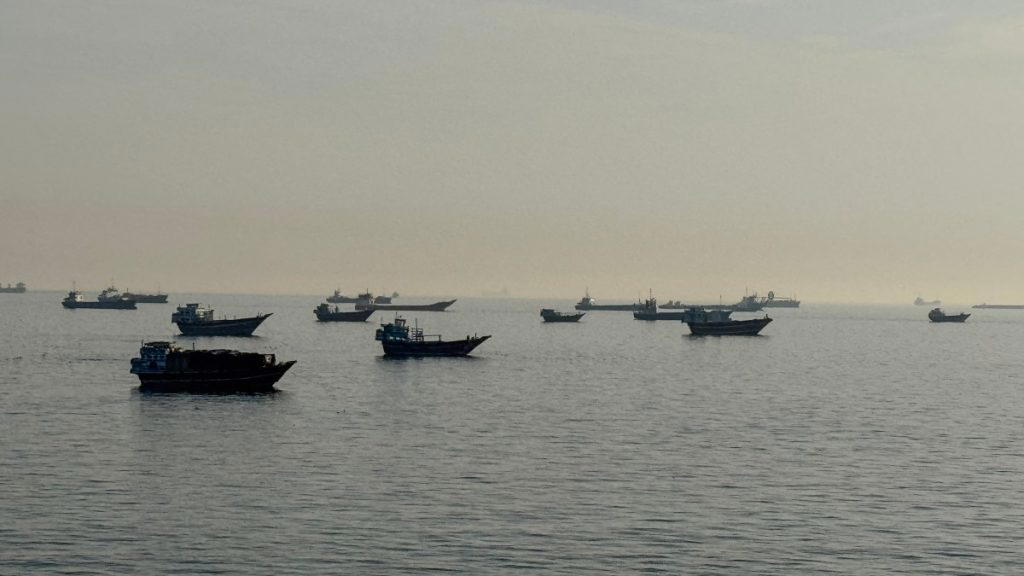
In a significant escalation of tensions, the United States launched airstrikes against Iran on Tuesday, with President Donald Trump announcing a renewed naval blockade in response to Tehran's aggressive regional actions. This military response follows a series of provocations and skirmishes that have heightened fears of a broader conflict in the Middle East.
The strikes are part of a strategy to contain Iran's influence, which has increasingly threatened key allies and shipping routes. The Iranian government swiftly retaliated, claiming responsibility for attacks on neighboring countries, asserting their right to defend national sovereignty. "We will not stand idly by as our adversaries threaten our security," declared Iranian Foreign Minister Hossein Amir-Abdollahian, highlighting the precarious nature of regional stability.
As the situation unfolds, the potential for a wider confrontation looms large. The U.S. administration's commitment to a naval blockade signals a shift toward a more aggressive posture, likely drawing criticism from allies wary of escalating military involvement. In this charged environment, diplomatic solutions will be essential to avert a deeper crisis, but the path forward remains fraught with uncertainty.