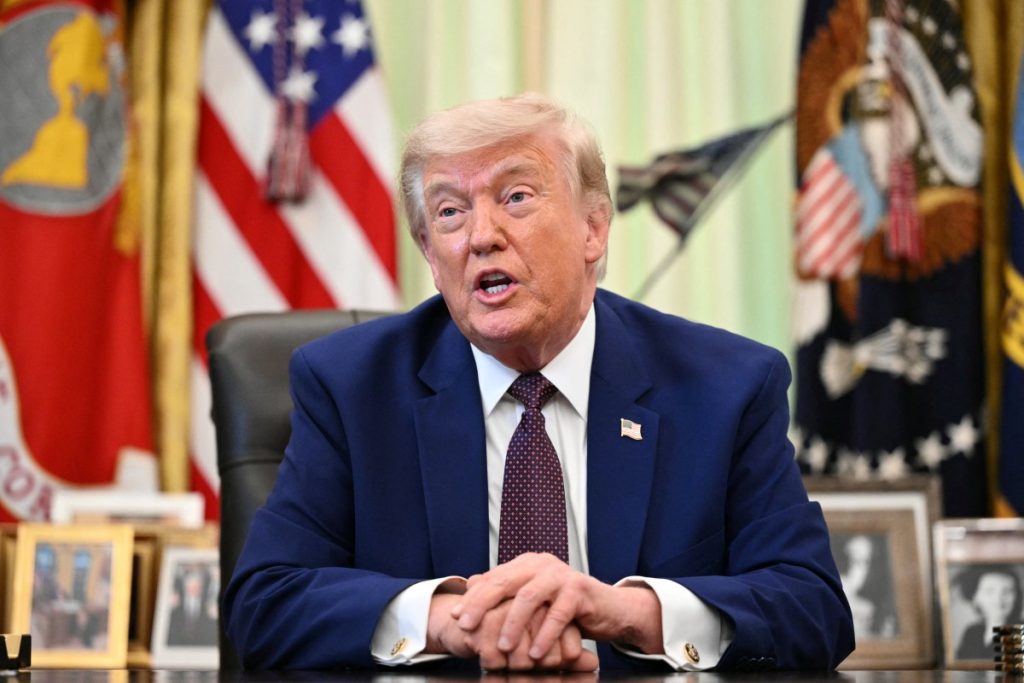
In a notable shift, President Donald Trump announced that the Strait of Hormuz would reopen following the anticipated signing of a peace deal with Iran on Friday. This statement contrasts sharply with earlier remarks suggesting that the vital waterway would resume operations immediately, reflecting the complexities surrounding U.S.-Iran relations.
The Strait of Hormuz, a critical artery for global oil transport, has been a flashpoint for geopolitical tensions. The looming peace deal aims to ease hostilities, but skepticism remains regarding Iran's commitment to the agreement. Trump emphasized, "We are on the brink of a historic resolution that will stabilize the region and secure our interests." Such optimism may overlook the deep-seated mistrust between the nations.
As the signing approaches, the international community watches closely. The reopening of the Strait could signal a new era of cooperation, yet the reality of implementation will likely be fraught with challenges. Stakeholders will need to navigate not only diplomatic hurdles but also the potential for further unrest, underscoring the fragility of peace in a historically turbulent region. The coming days will prove crucial in determining whether this deal can pave the way for lasting stability.
