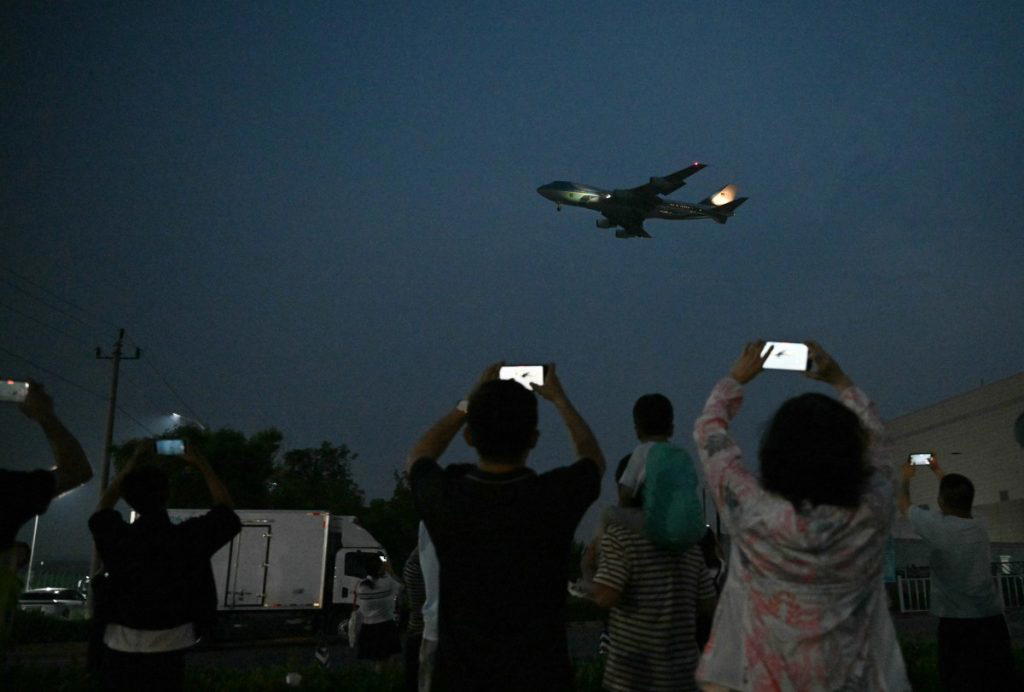
Air Force One descended through the overcast skies of Beijing, its landing marking a historic moment as President Donald Trump arrived in China for a summit with President Xi Jinping. Not since the early years of the last decade has a sitting U.S. president made a state visit to China, and the weight of this meeting is palpable. As the aircraft taxied down the runway at Beijing Capital International Airport, the reception party stood ready, an assemblage of Chinese officials poised to welcome the American delegation. The city, known for its intricate dance of tradition and modernity, now plays host to discussions that could reshape the future of international relations.
The significance of this visit is underscored by the current state of U.S.-China relations, a complex web woven over decades. Historically, the two superpowers have experienced oscillating tensions and cooperation, shaped by economic policies, trade disputes, and global strategic interests. The previous American administration had taken a hardline approach on trade, imposing tariffs and sanctions that strained diplomatic ties. However, Trump's visit signifies a potential thaw, as both nations stand at the precipice of redefining their bilateral relations in a rapidly changing global order.