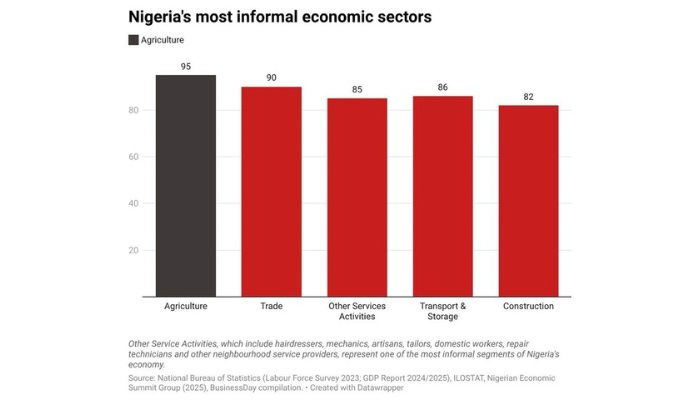
Nigeria's economic landscape is sharply divided, revealing a stark contrast between the formal economy, reflected in government statistics, and the vast informal sector largely left unregulated. Recent reports indicate that while GDP figures celebrate growth, millions remain outside the tax net, relying on informal trade and services to survive. This disconnect raises questions about governance and economic policy effectiveness.
Stakeholders, including Chijioke Eke, CEO of a leading financial advisory firm, emphasize the urgency of addressing this gap, stating, "Without integrating the informal economy into formal structures, Nigeria risks stalling its growth potential and exacerbating inequality." The government's failure to engage with this significant segment undermines efforts to create a sustainable economic environment.
As Nigeria faces mounting pressure to diversify its economy and improve fiscal responsibility, the need for inclusive policies is more critical than ever. The forthcoming economic reforms should prioritize bridging this divide, fostering a comprehensive approach that ensures all sectors contribute to national growth. If left ungoverned, Nigeria's informal economy will continue to thrive in the shadows, limiting the country's overall development potential.