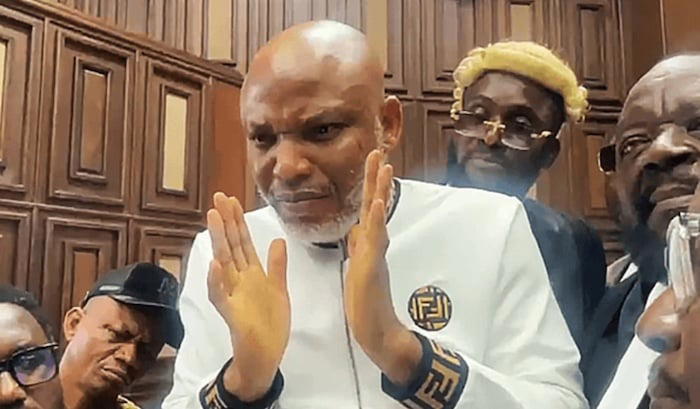
In a significant political maneuver, South-East leaders, led by Governor David Umahi, are actively seeking avenues to facilitate the release of Nnamdi Kanu, the leader of the Indigenous People of Biafra (IPOB). This initiative comes in the wake of ongoing tensions and calls for dialogue in the region, where Kanu's imprisonment has been a focal point for secessionist sentiments.
Governor Umahi emphasized the necessity of political solutions, stating, "We are committed to exploring every possible means to ensure peace and unity in our region, starting with Nnamdi Kanu's release." This approach reflects a broader strategy to de-escalate conflicts and foster reconciliation within South-East Nigeria, where socio-political grievances have been exacerbated by economic challenges and security issues.
As discussions progress, the potential for political engagement could reshape the landscape of governance and ethnic relations in Nigeria. Observers will be keenly watching whether these efforts yield tangible results or if they will merely serve as a temporary measure in a complex political environment. The outcome may significantly influence regional stability and the future of separatist movements in the country.

