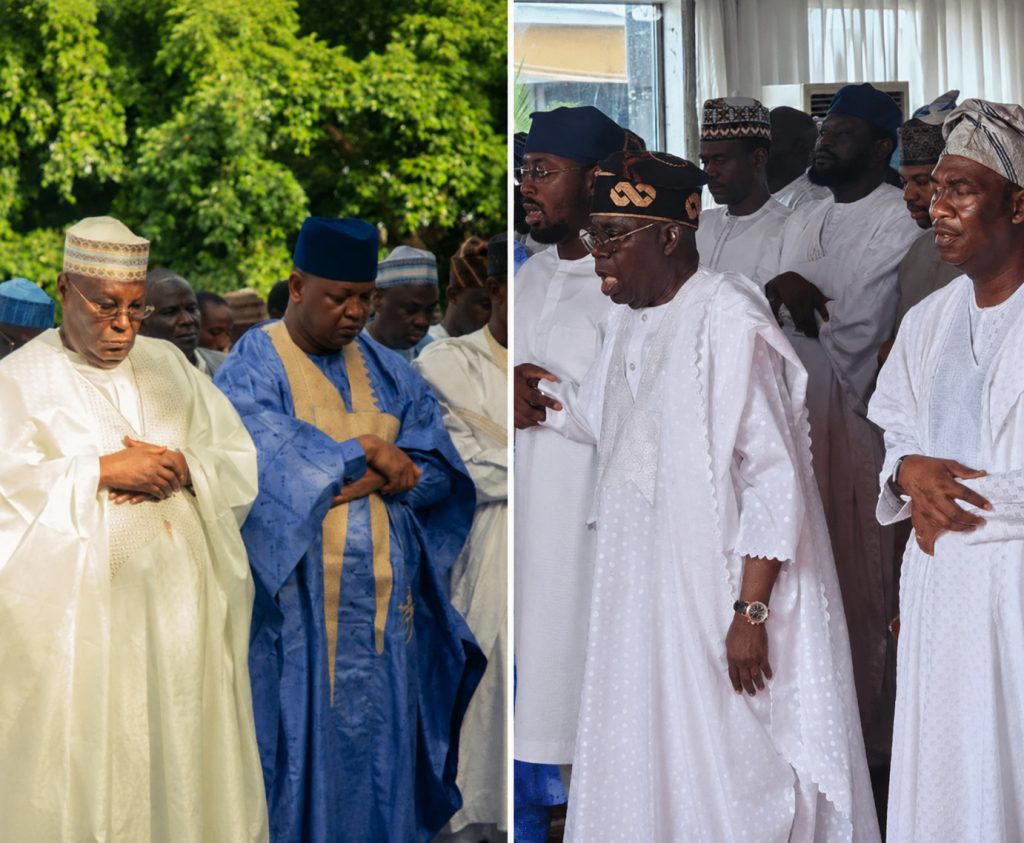
As Nigeria's political landscape evolves, President Bola Tinubu's recent observation of Eid in Lagos underscores the significance of religious and cultural unity in governance. Accompanied by key figures, including Chief of Staff Femi Gbajabiamila and National Security Adviser Nuhu Ribadu, Tinubu's presence at the celebration highlights his administration's commitment to engaging with the populace through shared traditions.
Meanwhile, former Vice President Atiku Abubakar joined Eid celebrations in Abuja, emphasizing the importance of solidarity among Nigeria's leaders. "Eid is a time for reflection and togetherness, transcending our political differences," Atiku remarked, signaling a potential for dialogue amid the country's divisive atmosphere. This sentiment comes at a critical juncture as Tinubu's administration faces pressing economic challenges and security concerns.
As Nigeria moves forward, the actions of both leaders suggest an opportunity for collaboration that could bridge political divides. The observance of Eid serves not only as a reminder of the nation's rich cultural heritage but also as a potential catalyst for unity in addressing the pressing issues facing the nation. The coming months will reveal whether this spirit of togetherness can translate into effective governance and policy-making.