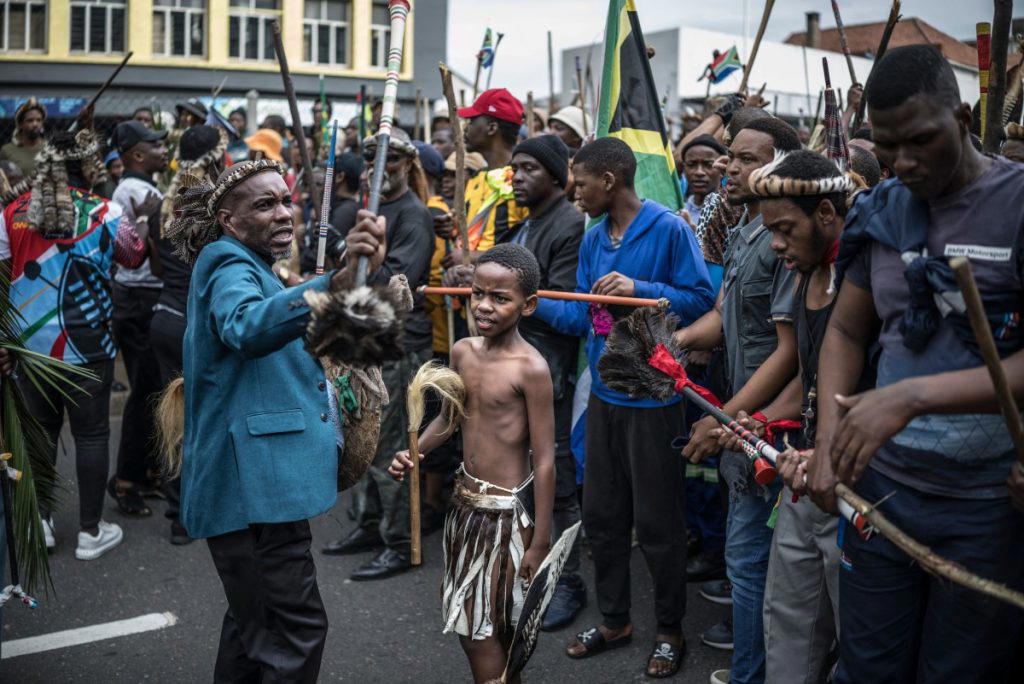
Tensions in South Africa have escalated dramatically as thousands of citizens took to the streets, demanding the expulsion of undocumented immigrants following a government ultimatum. The protests, marked by violence and fear, have led to at least four fatalities and prompted a mass exodus of foreign nationals, primarily from neighboring countries. This wave of unrest comes against a backdrop of economic hardship and rising unemployment, which many South Africans blame on the presence of undocumented immigrants.
A key figure in the protests, Julius Malema, leader of the Economic Freedom Fighters, stated, “We cannot allow our country to be a dumping ground for the world’s problems.” His words resonate with a significant segment of the population frustrated by perceived competition for jobs and resources. The government's response remains crucial, as it grapples with balancing public sentiment and humanitarian concerns.
As South Africa approaches crucial elections, the implications of these protests could reshape political alliances and voter behavior. The government's handling of the immigration issue may prove pivotal in determining the outcome, highlighting the intersection of xenophobia and national identity in a country still healing from its apartheid past.

