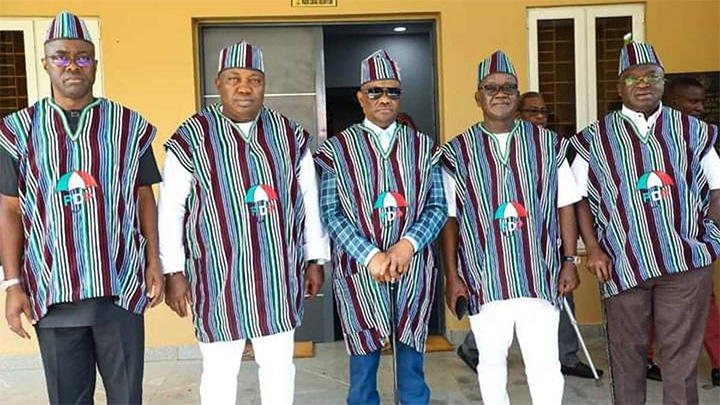
The political landscape in Nigeria is shifting, as the alliance between the People's Democratic Party (PDP) and the African People's Movement (APM) has ignited controversy. Rivers State Governor Nyesom Wike has denounced the coalition as a "political 419," suggesting ulterior motives and a betrayal of voter trust. This alliance comes in the wake of recent Supreme Court rulings that have raised questions about the integrity of electoral processes, with Wike asserting, "the police does not interpret the law, and the police is not in a position to interpret the Supreme Court verdict."
Meanwhile, Oyo State Governor Seyi Makinde has called for a more democratic approach, insisting that "let the people decide" should be the guiding principle in determining political alliances and leadership. His stance highlights a growing frustration with perceived political maneuvering that prioritizes power over public will.
As tensions mount, the outcome of this alliance could significantly influence the upcoming elections. The divergent views of Wike and Makinde reflect a broader debate within Nigeria about the role of political coalitions in shaping governance. How voters respond to these alliances may redefine political loyalties and impact future governance in the region.