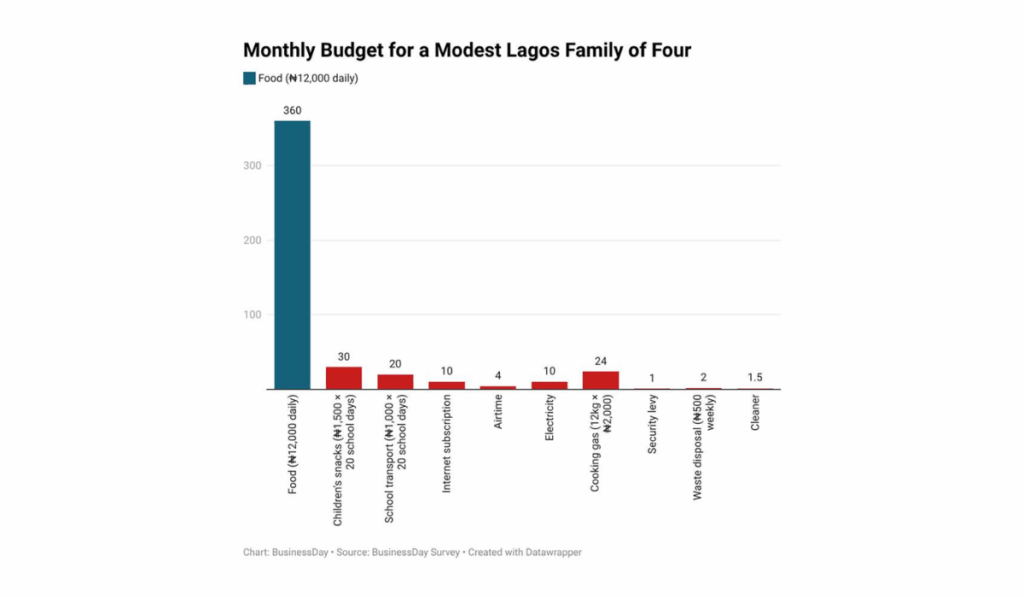
Nigeria's minimum wage, set at N30,000, starkly contrasts with the estimated N700,000 required for a family's basic survival, highlighting a critical economic disparity. As inflation soars and living costs rise, many working families find themselves struggling to make ends meet. This gap has resulted in increased hardship, with many employees unable to afford essentials.
The National Bureau of Statistics reports that over 60% of Nigerians live below the poverty line, exacerbated by stagnant wages and growing unemployment. Ibrahim Sadiq, a labor rights advocate, states, "The current wage structure is not just insufficient; it is a recipe for despair among the working class." The alarming situation calls for urgent policy reforms to address wage inadequacies and support families.
Looking ahead, the Nigerian government must consider adjusting the minimum wage to reflect real living costs. Without decisive action, the economic divide will continue to widen, threatening social stability and overall economic growth. Stakeholders must work collaboratively to ensure fair wages that enable citizens to lead dignified lives while contributing to the nation's development.