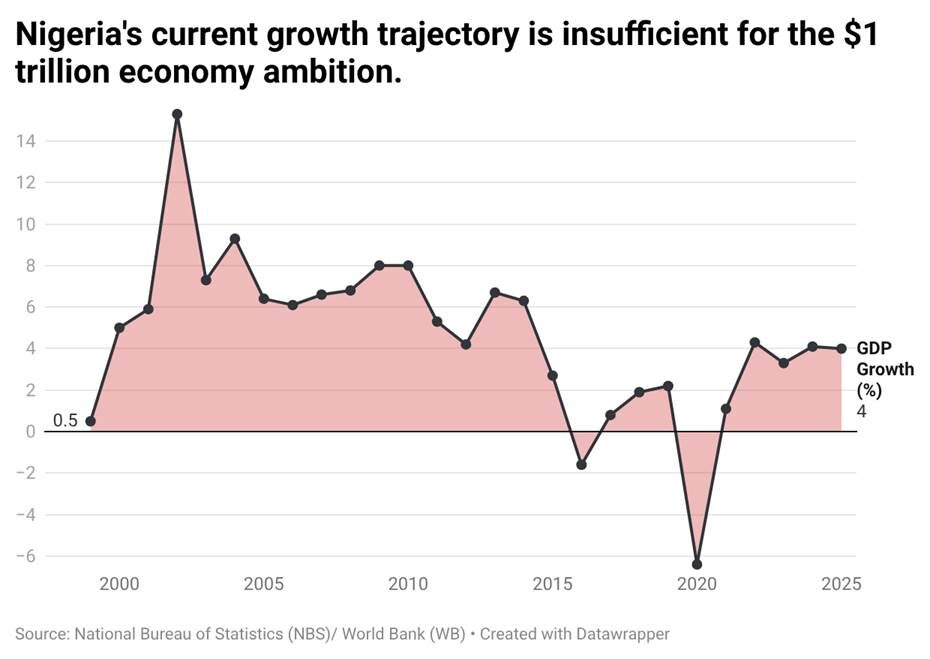
Nigeria's economy demonstrated resilience as its GDP growth surged to 3.89% in Q1 2026, a notable improvement from 3.13% in the same quarter of the previous year. This uptick reflects ongoing recovery efforts amidst global economic uncertainties and domestic challenges, including inflationary pressures and infrastructure deficits. Key sectors driving this growth included agriculture and services, which have been pivotal in stabilizing the economy.
Elizabeth Adegbesan, an economist at the Nigerian Economic Summit Group, commented, "This growth signals a positive trajectory, but we must remain vigilant about external shocks and domestic reforms." The government’s commitment to diversifying the economy and enhancing productivity has become increasingly critical as global markets face volatility.
Looking ahead, stakeholders emphasize the need for sustained investment in infrastructure and human capital to maintain this growth momentum. With the right policies and strategic focus, Nigeria can leverage this growth phase to address longstanding challenges and improve the overall quality of life for its citizens. The upcoming fiscal policies and international partnerships will play a crucial role in determining the sustainability of this momentum.