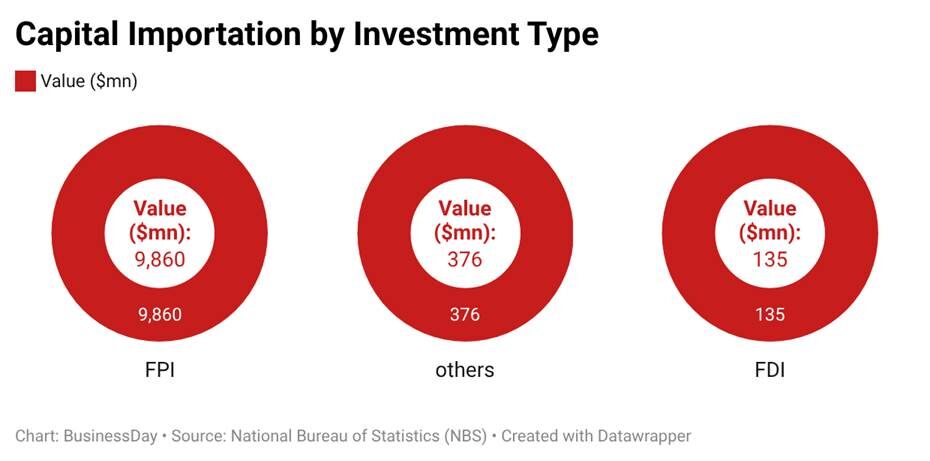
Nigeria's recent surge in foreign capital investment, totaling $10.37 billion in the first quarter of 2026, reflects a significant economic interest but raises concerns about its potential to create jobs. This figure nearly doubles the previous year's $5.64 billion, showcasing an inflow largely directed towards financial markets and real estate rather than sectors that traditionally generate employment.
Experts highlight that while the influx of capital is promising, it does not necessarily translate into job creation. "We need to ensure that this capital drives investments in industries that can provide sustainable employment for our youth," stated Dr. Amina Yusuf, an economist at the Nigerian Economic Summit Group. This sentiment echoes the broader anxiety surrounding Nigeria's economic trajectory, which has long struggled with high unemployment rates despite attracting foreign investments.
Looking ahead, Nigeria must prioritize investments that foster job creation, particularly in manufacturing and technology. By aligning foreign capital with local economic needs, the country can better leverage these funds to stimulate growth and improve living standards for its citizens. The challenge lies in transforming this financial influx into tangible opportunities for millions of Nigerians.