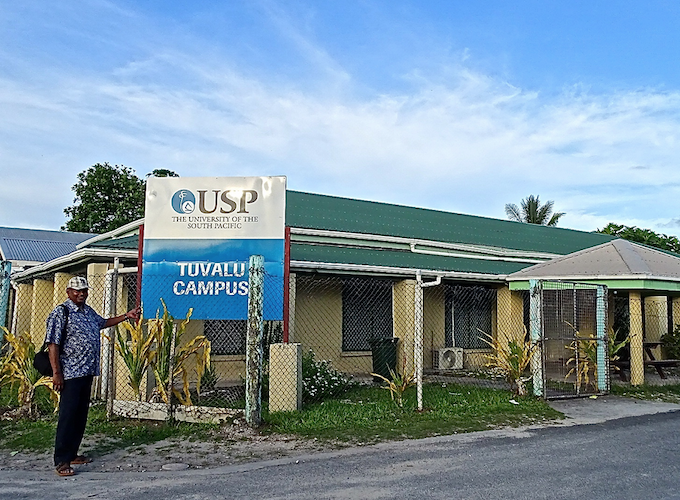
In an age where higher education often means sprawling campuses and extensive facilities, the University of the South Pacific's Tuvalu Campus challenges conventional norms with its three classrooms. Nestled in the Pacific island nation of Tuvalu, this unique institution caters to a small but dedicated group of students, emphasizing quality over quantity in education. The campus serves as a vital resource for local students, offering courses that are tailored to the needs of the island community.
Established in response to limited access to higher education in the region, the Tuvalu Campus embodies resilience and innovation. "We focus on creating impactful learning experiences rather than expanding our physical footprint," stated Dr. Iona Tawake, the campus director. This philosophy reflects a broader trend in education where localized, community-focused institutions are emerging as essential players in academic development.
Looking ahead, the Tuvalu Campus may inspire similar initiatives in other remote areas, proving that education can thrive in even the most constrained environments. As global education systems evolve, the success of such small-scale universities could redefine how we approach learning in isolated communities, fostering a new paradigm for higher education worldwide.