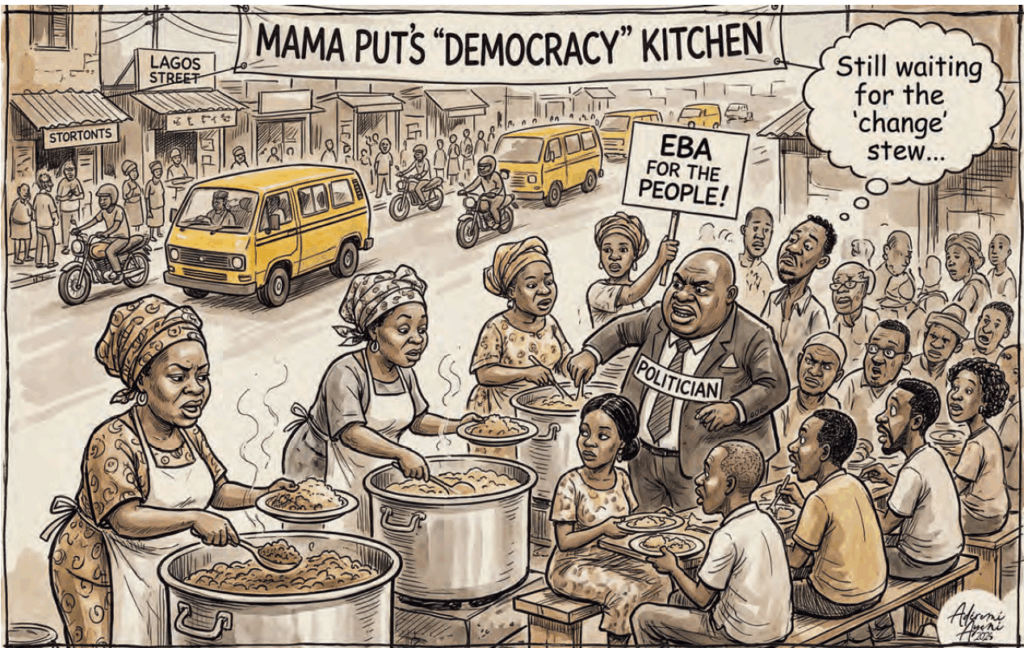
In Nigeria, the proliferation of roadside canteens known as Mama Put has emerged as a stark indicator of the nation's economic struggles. These informal eateries, often offering affordable local dishes, have become a familiar sight amid rising food prices and inflation, illustrating a shift in consumer behavior as many citizens increasingly seek budget-friendly dining options.
Recent reports highlight a surge in Mama Put establishments, signaling a growing reliance on inexpensive meals due to declining purchasing power. Many Nigerians, particularly in urban areas, are turning to these canteens not only for sustenance but as a means to support local economies. "Mama Put is more than just food; it's a reflection of our current reality," says Abike Adebayo, a food security analyst. This illustrates how these eateries encapsulate the socio-economic challenges faced by many families.
As the economic landscape continues to evolve, Mama Put may serve as both a barometer of poverty and resilience. The future of Nigeria's food industry may hinge on the adaptability of these informal sectors, underscoring the importance of addressing the underlying issues of poverty and economic disparity.
