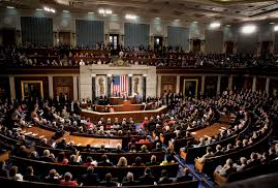
The recent resolution passed by the U.S. House of Representatives reflects growing concerns over President Trump's military strategy in Iran. In a narrow 215-208 vote, which saw support from four Republican lawmakers, the resolution aims to curb any further military escalation in the Middle Eastern nation. This move comes amid heightened tensions following a series of confrontations between U.S. and Iranian forces, raising alarms about potential conflict.
Critics of the administration's approach argue that unchecked military action could lead to catastrophic outcomes. “Congress has a constitutional duty to prevent an unnecessary war,” stated Representative Barbara Lee, a prominent advocate for the resolution. The symbolic nature of the vote underscores the deep divisions within Congress regarding foreign policy and military intervention.
As the 2026 elections approach, this resolution may serve as a litmus test for candidates on their stance toward foreign military engagements. With public sentiment increasingly wary of prolonged conflicts, legislators may face pressure to prioritize diplomatic avenues over military solutions. The outcome of this debate will likely influence not only U.S.-Iran relations but also the broader geopolitical landscape.

