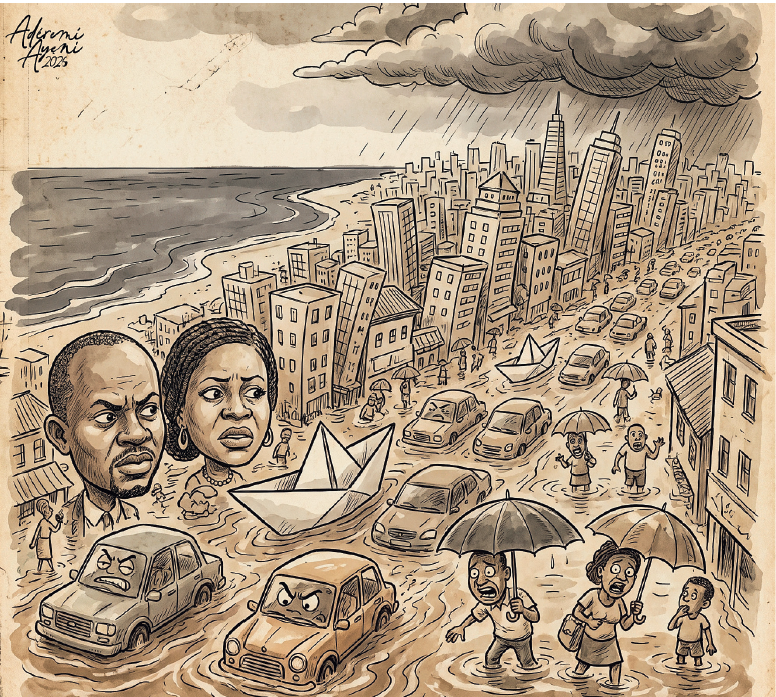
Lagos, Nigeria's bustling economic hub, faces an escalating crisis as annual flooding transforms from a seasonal nuisance into a long-term existential threat. Recent studies indicate that by 2050, substantial portions of the city could be submerged, exacerbated by climate change and rising sea levels. With over 21 million residents vulnerable to these conditions, the urgency for comprehensive flood management strategies has never been clearer.
The Nigerian Meteorological Agency has warned of increasingly erratic rainfall patterns, which, combined with inadequate drainage infrastructure, place millions at risk. "If we do not act immediately to enhance our resilience against flooding, we will see devastating impacts on our economy and public health," states Dr. Aisha Ibrahim, an environmental scientist at the University of Lagos.
As the government grapples with urban planning and infrastructure investment, proactive measures are essential. Implementing sustainable drainage systems and restoring wetlands could mitigate flooding risks. Without decisive action, Lagos risks not just its physical landscape, but the livelihoods and futures of its citizens, highlighting an urgent need for both local and international support in addressing this looming crisis.