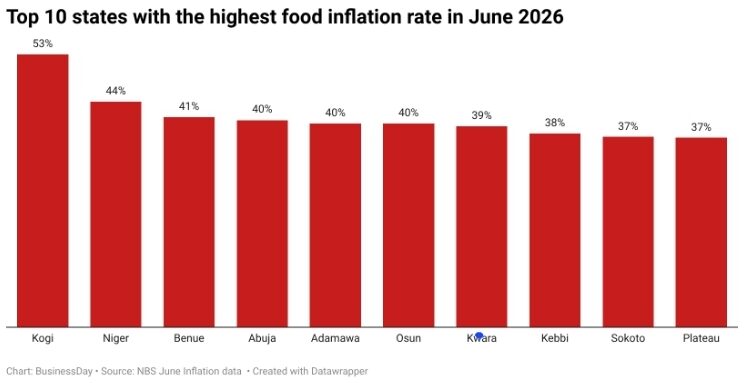
Nigeria's economy is facing a pressing challenge as food inflation in Kogi State surpasses 50%, highlighting the struggles of households amid rising living costs. Despite a general decline in headline inflation, food prices have remained stubbornly high, particularly in Kogi and Niger, where agricultural productivity has been compromised by adverse weather conditions and infrastructural deficits.
The impact of soaring food prices is palpable; families are grappling with limited purchasing power, leading to increased reliance on cheaper, less nutritious food options. "The situation is dire. Families are forced to make tough choices between essential meals and other necessities," said Dr. Adeola Okunola, an economist at the University of Abuja. This sentiment reflects a growing concern among experts about food security in the region.
Looking ahead, the Nigerian government must prioritize agricultural reforms and investment in infrastructure to alleviate food supply constraints. With global economic uncertainties looming, addressing these fundamental issues will be critical in stabilizing food prices and ensuring that households can meet their basic needs. Without decisive action, the risk of prolonged food insecurity will continue to threaten the livelihoods of many Nigerians.