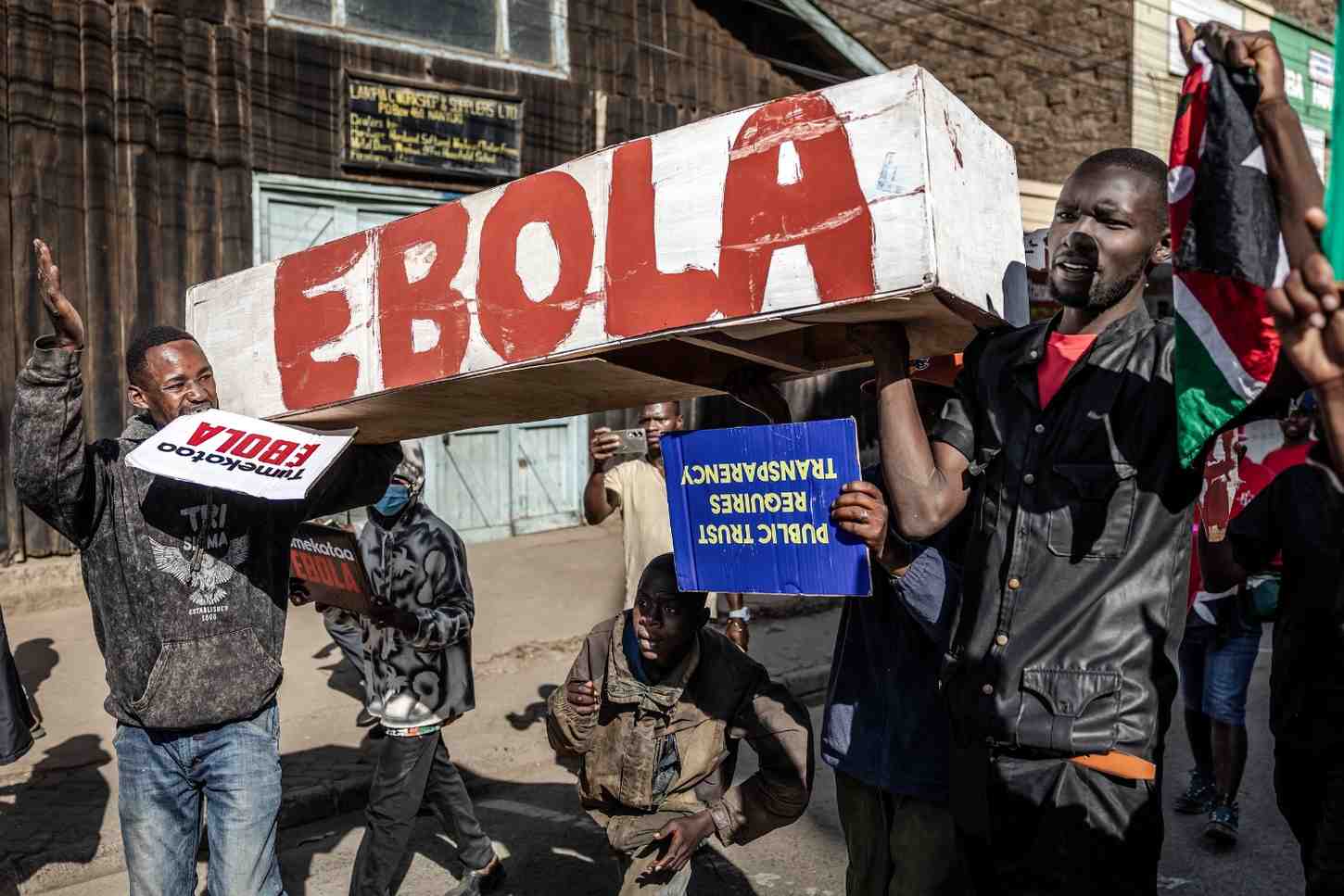
Amid rising tensions, Kenyan police clashed with protesters opposing the establishment of a US-funded Ebola treatment center in the capital, Nairobi, on June 9, 2026. The demonstration ignited fears of Ebola's potential introduction, despite Kenya's record of zero confirmed cases. Protesters argue that the center could invite a health crisis rather than prevent one, citing concerns over safety and the management of infectious diseases.
Police responded with tear gas to disperse the crowd and made several arrests, heightening public anxiety. "Bringing potential carriers of such a deadly disease into our communities is a risk we cannot accept," stated Margaret Wanjiru, a local health advocate. This sentiment resonates widely among Kenyans who fear the implications of such a facility in a nation that has successfully avoided the outbreak.
As the government grapples with public dissent, it must balance international collaboration on health threats with the concerns of its citizens. The ongoing situation underscores the delicate nature of public health initiatives in regions with no prior exposure to such diseases, indicating that future dialogues will be crucial in addressing community fears while ensuring preparedness against global health risks.