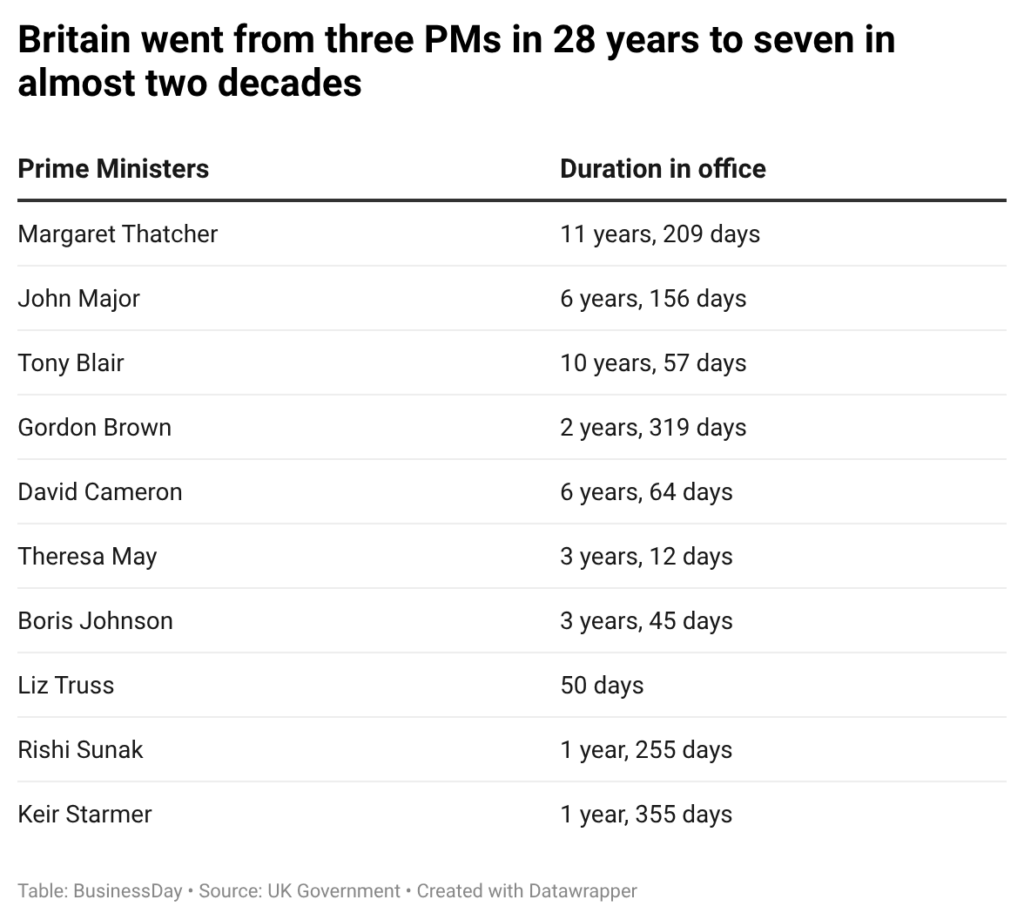
The recent resignation of British Prime Minister Keir Starmer marks another turning point in a decade characterized by political instability in the UK. Since 2016, the nation has witnessed a rapid succession of leaders, from Theresa May's tumultuous tenure to Boris Johnson's controversial exit, culminating in Starmer's departure amid mounting pressures from within his party and the electorate. This instability has not only affected British governance but has also sent shockwaves through international relations, particularly in Africa.
Dr. Nneka Okafor, a political analyst, stated, “The UK’s leadership changes are not just internal matters; they affect global partnerships, notably in trade and development.” As Britain grapples with its identity post-Brexit, African nations are left to navigate an uncertain future, potentially losing valuable strategic partnerships.
Looking ahead, the next leader must address not only domestic challenges but also restore confidence in Britain’s international commitments. For African nations dependent on British trade and investment, the outcome of this leadership churn will play a crucial role in shaping economic ties and geopolitical alliances in the coming years.