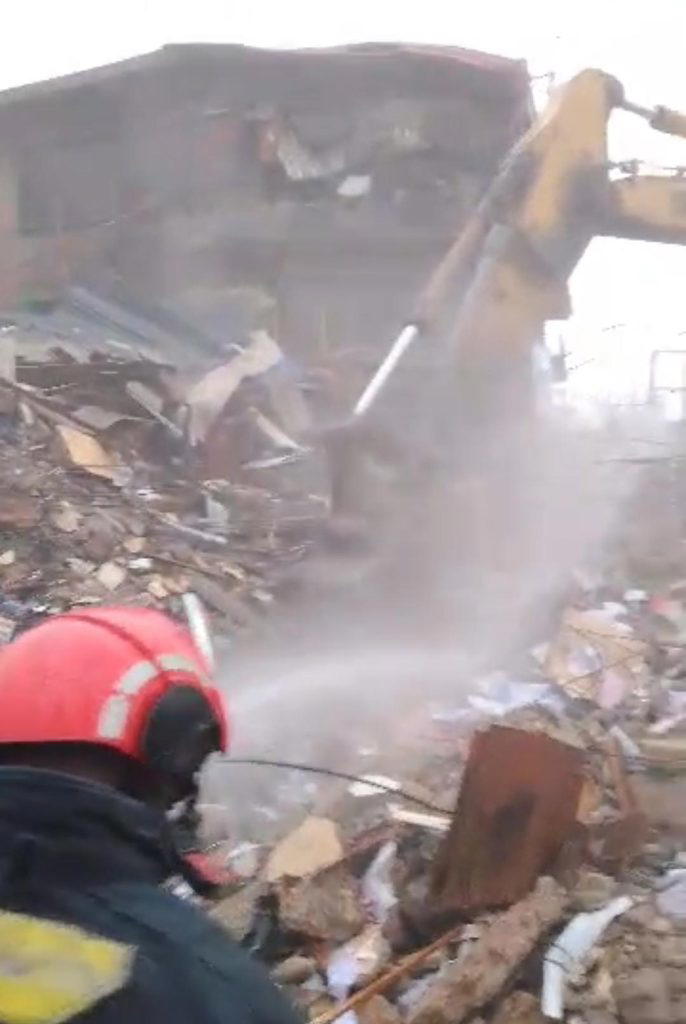
The tragic collapse of a Lagos mall, claiming the lives of a baby girl and eight others, underscores a critical failure in infrastructure oversight and safety regulations. Witnesses reported that the structure showed signs of distress prior to the disaster, raising questions about the developers' adherence to building codes and the government's enforcement of safety measures.
Local officials confirmed that rescue operations were complicated by the unstable debris, highlighting the urgent need for improved emergency response protocols in urban areas. “Until developers and officials whose negligence leads to these disasters are prosecuted and convicted, others will continue to gamble with human lives,” lamented Adetokunbo Adebayo, a prominent civil rights advocate. This sentiment resonates deeply in a society weary of repeated tragedies linked to poor construction practices.
Moving forward, it is imperative that Lagos authorities not only prioritize stricter regulatory frameworks but also foster a culture of accountability among developers. Without decisive action and reform, the risk of future incidents remains high, jeopardizing the safety of countless citizens. The time for systemic change is now, to prevent further loss of life and restore public trust in infrastructure safety.