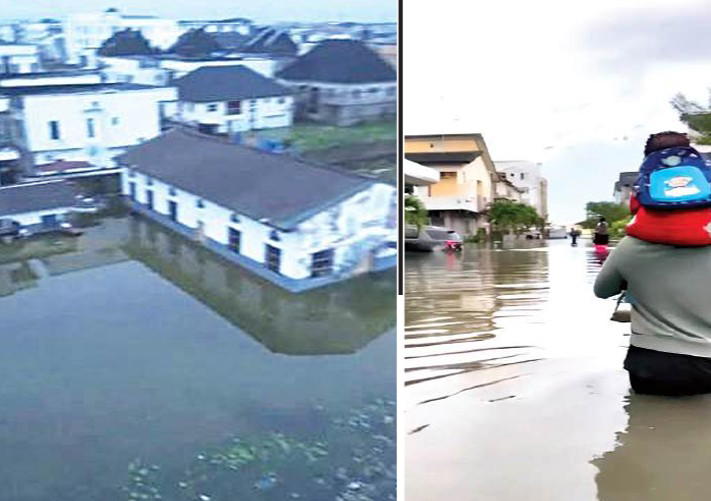
In a surprising twist, the recent flooding in Lekki has highlighted the vulnerability of even the wealthiest residents, challenging the notion that affluence guarantees immunity from environmental disasters. Traditionally regarded as a bastion of wealth in Lagos, Lekki’s upscale estates have been inundated, revealing the inadequacies of urban planning and drainage systems.
Residents expressed their frustrations, with local business owner Chinedu Okwuosa stating, “We invested millions into our homes, yet the government has failed to provide basic infrastructure. It’s disheartening to see our investments washed away.” This situation underscores the growing concern over climate resilience in Nigeria’s urban centers, where rapid development has outpaced infrastructure improvements.
As floodwaters recede, the implications for property values and investment in Lekki remain uncertain. Stakeholders are increasingly calling for a reevaluation of urban planning policies to better accommodate the realities of climate change. With predictions of more frequent extreme weather events, Lekki’s elite may need to advocate for systemic changes, ensuring that their opulent lifestyles are not only sustainable but also secure against future natural threats.