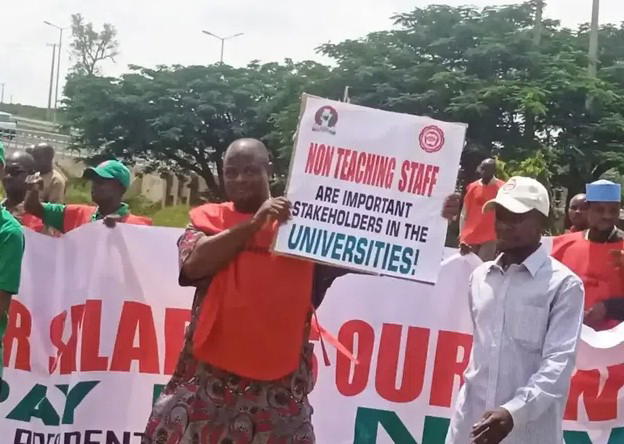
The ongoing strike by non-academic staff in Nigeria's public universities has reached a critical impasse, further disrupting educational activities nationwide. The meeting between the Federal Government and the Senior Staff Association of Nigerian Universities ended without resolution, prolonging the frustrations of students and parents alike. This strike, which has entered its third week, stems from long-standing grievances over unpaid allowances and poor working conditions.
Union leaders have expressed their disappointment, emphasizing the urgency of the matter. “We cannot continue to compromise on the welfare of our members; the government must take decisive action,” stated Mohammed Ibrahim, the union’s president. This deadlock not only highlights the government's struggle to address educational sector issues but also reflects broader systemic challenges within Nigeria's public service.
As the academic calendar faces further disruption, stakeholders fear long-term repercussions on students' futures. With both sides at a standstill, the need for urgent dialogue has never been more critical. If the government fails to engage meaningfully with the unions, the academic landscape in Nigeria could face unprecedented challenges, exacerbating educational inequalities and hindering national development.