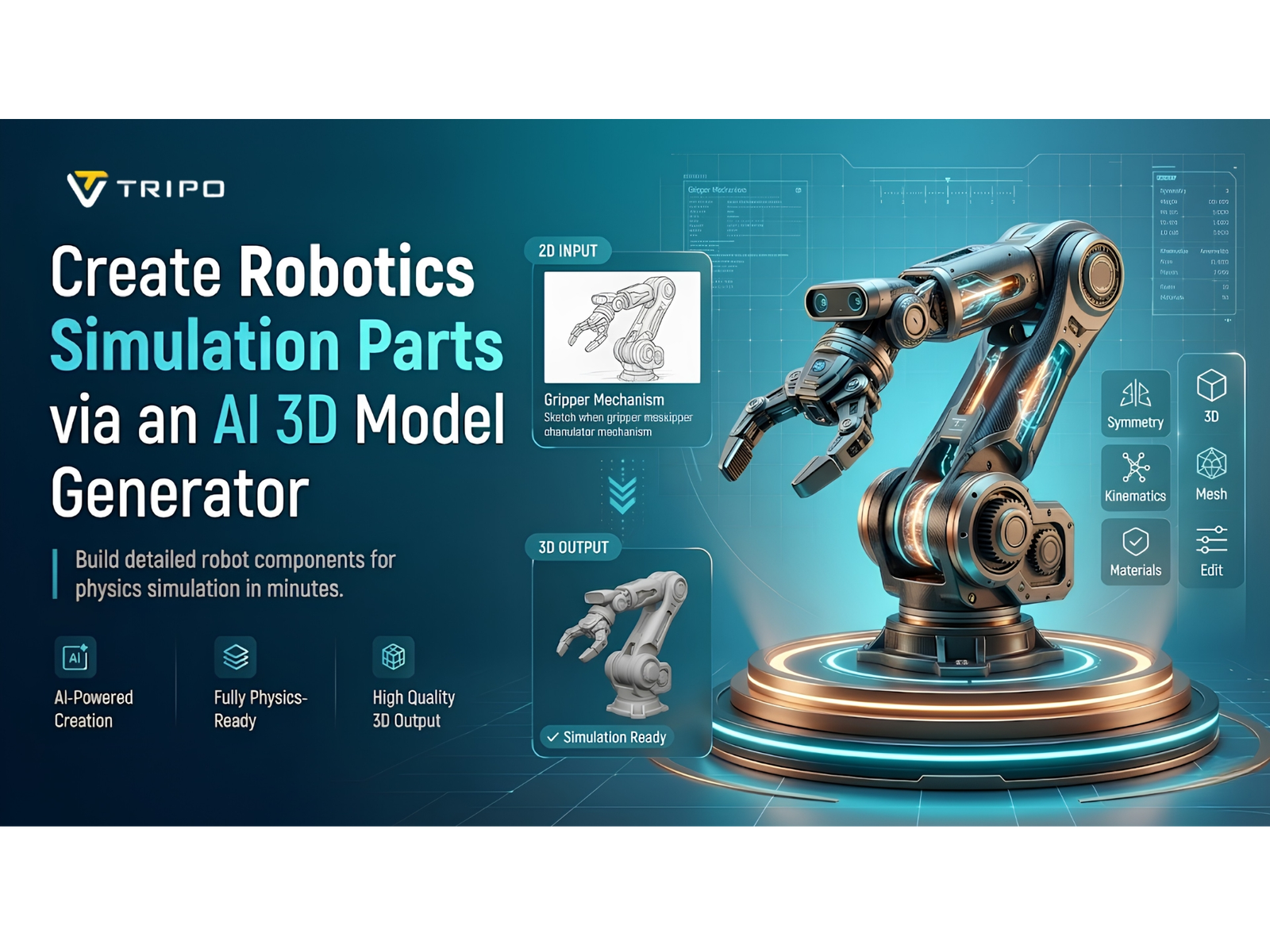
The integration of artificial intelligence in the creation of 3D models marks a significant advancement in robotics simulation, catering to the growing need for precision in engineering. As industries increasingly rely on simulations for design and testing, the demand for high-quality digital components has surged. Traditional methods of creating these models are labor-intensive and require specialized expertise, which can delay project timelines and inflate costs.
Recent developments highlight a shift to AI-driven 3D model generation, which promises to streamline this process. "AI can drastically reduce the time and expertise needed to produce accurate models, enhancing our ability to simulate complex robotics systems," stated Dr. Sarah Nwosu, Chief Technology Officer at Innovate Robotics. This technology not only improves motion behavior and collision detection but also ensures robust engineering validation, a crucial aspect for industries such as manufacturing and autonomous vehicles.
Looking ahead, the proliferation of AI-generated 3D models could revolutionize the robotics sector, enabling faster innovation cycles and more sophisticated designs. As this trend unfolds, stakeholders must remain vigilant about the quality and reliability of AI-generated components to fully harness their potential.