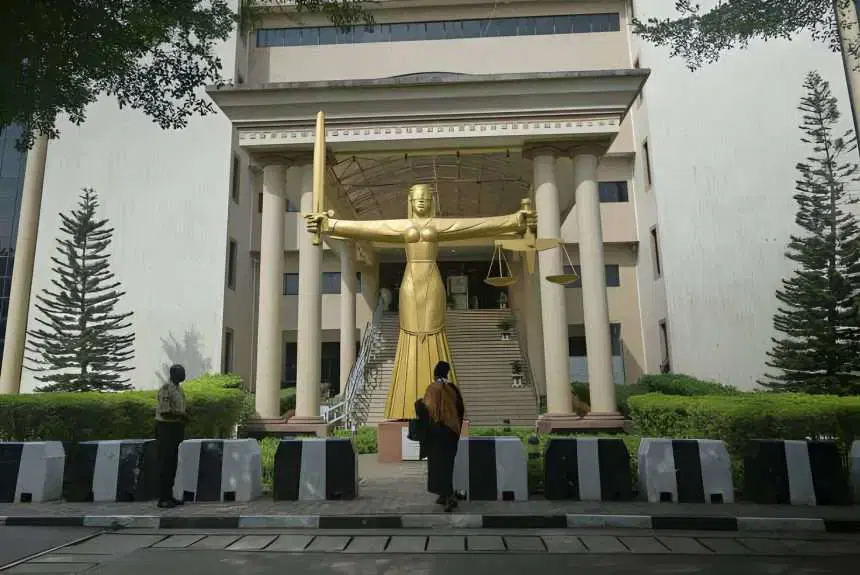
A recent high court ruling in Nigeria has ignited significant concerns regarding civic freedoms, as the court ordered the Socio-Economic Rights and Accountability Project (SERAP) to pay 100 million naira in damages to two officials of the Department of State Services (DSS). This unprecedented decision is seen as a troubling precedent that could stifle the operations of human rights organizations across the nation.
The case stems from SERAP's allegations of human rights abuses by the DSS, highlighting the ongoing tension between governmental authorities and civil society. Critics argue that the ruling could deter activists and organizations from pursuing legitimate claims against state actors, ultimately compromising accountability. "This judgment poses a serious threat to the already fragile state of civic space in Nigeria," stated Adetokunbo Mumuni, Executive Director of SERAP.
As civic space continues to shrink, the implications of this ruling may resonate beyond Nigeria, affecting regional human rights advocacy. The international community must closely monitor these developments, as the health of democracy in Nigeria hinges on the protection of civic freedoms and the ability of organizations to challenge state actions without fear of retribution.