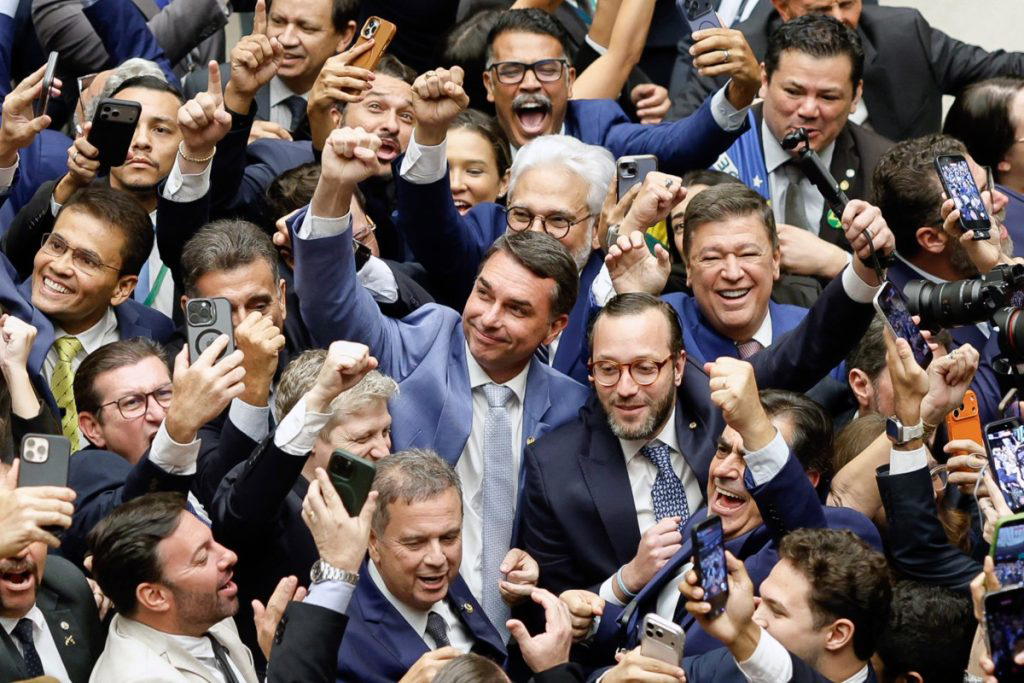
In a significant political move, Brazil's Congress has approved a bill that considerably reduces the prison sentence of former President Jair Bolsonaro, countering the veto of current President Luiz Inacio Lula da Silva. This development underscores the ongoing polarization within Brazilian politics, as Bolsonaro, a far-right figure, continues to retain substantial support despite his controversial tenure.
The bill's passage came amid intense lobbying from Bolsonaro's allies, who argue that the sentence was excessively harsh. "This decision represents a triumph of justice and democracy," stated congressman Ricardo Barros, a prominent supporter of Bolsonaro. The reduced sentence reflects broader trends in Brazil, where public sentiment remains divided as Lula's administration grapples with economic challenges and societal issues.
Looking ahead, the implications of this legislative shift are profound. It not only emboldens Bolsonaro and his supporters but also raises questions about Lula's ability to govern effectively in a deeply fractured political landscape. As Brazil approaches the next election cycle, the dynamics between these two leaders will be pivotal in shaping the country's future.