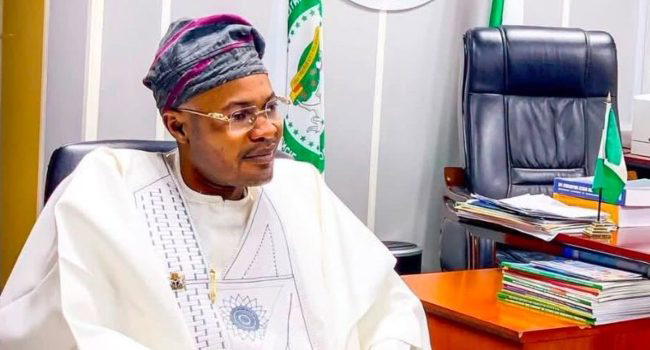
Former Vice President Atiku Abubakar has firmly denied allegations that he bribed former House of Representatives Speaker Ghali Na’Abba to facilitate the impeachment of ex-President Olusegun Obasanjo. The accusation resurfaced following recent comments by some political figures, raising questions about the integrity of past political maneuvers in Nigeria. Atiku's denial underscores the contentious nature of Nigerian politics, where historical grievances often resurface amidst current electoral battles.
Atiku questioned the motives behind the allegations, stating, "If this allegation were true, why did he never make it while Rt. Hon. Na’Abba was alive? Why wait until the only man who could confirm or refute the claim has departed this world?" This statement reflects a broader trend in Nigerian political discourse, where deceased individuals are sometimes used as tools for political leverage, complicating accountability and truth.
As Nigeria approaches the next general elections, the implications of such allegations could influence voter sentiment and party dynamics. Political analysts suggest that maintaining transparency and addressing historical grievances will be critical for candidates aiming to foster trust and credibility among the electorate.